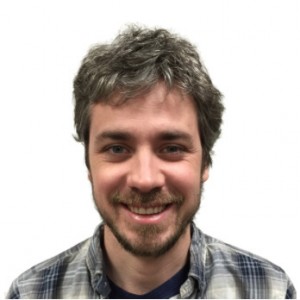
Talley’s thoughts on his experience with the fellowship program:
“During my postdoc, I attended Jennifer’s Quantitative Imaging course at Cold Spring Harbor. There I discovered my passion for all things microscopy, and applied for the post-doctoral fellowship at HMS the following year. During the fellowship, I was able to immerse myself in microscopy: forming a solid theoretical foundation in quantitative imaging, as well as a breadth of practical techniques including live-cell imaging, FRET, FRAP, confocal, TIRF, and super-resolution microscopy. In addition, I learned a lot about the day-to-day operations and considerations when running a very heavily used imaging core facility. I was particularly involved in optimizing acquisition and reconstruction protocols for structured illumination microscopy. Additionally, I developed multiple lectures for on-campus workshops and our course at Cold Spring Harbor.
Starting in 2015, I accepted a position as a Research Associate in the Cell Biology Department at HMS, where I manage a small core specializing in advanced optical imaging techniques including 3D-Structured Illumination super-resolution microscopy, as well as two light sheet microscopes: a diSPIM, and a Lattice light sheet microscope. Jennifer’s post-doctoral fellowship was an incredible experience that provided me with more resources than I could have hoped for to feed my desire to learn more about microscopy and core facility management.”
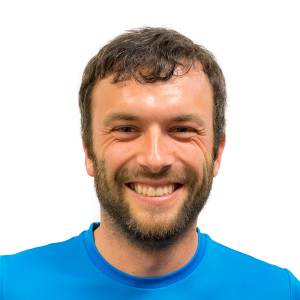
Michaels’s thoughts on his experience with the fellowship program:
“In March 2016, I started working as an advanced microscopy fellow in Jennifer’s core facility, which is located on a historic, yet international and diverse campus that hosts numerous renowned researchers. From the outset, I was profiting from the team’s extensive expertise in quantitative light microscopy and teaching – and their willingness to share that knowledge. Thanks to Jennifer’s unique fellowship program, I significantly expanded my expertise in these areas and learned advanced techniques such as spinning disc confocal and total internal reflection microscopy to great detail. Teaching was a heavy focus of my work. Not only did I train and advise researchers in the use of advanced microscopy techniques, I also gave lectures, taught workshops and contributed to our famous yearly “Quantitative Imaging” course in Cold Spring Harbor. Furthermore, I truly appreciated the freedom of pursuing my own projects. This included designing and building a compact light sheet microscope for research and education, designing and integrating four new Nikon widefield microscopes for various applications, as well as writing scientific reviews and book chapters.
In December 2018, I finished my postdoc position in Jennifer’s facility. In January 2019, I took on a new role as Field Application Specialist for the invol3D Flamingo project (https://involv3d.org/flamingo). There, I’ll collaborate with researchers using traveling, powerful light sheet microscopes. Throughout the process of transitioning into my new job, Jennifer was – and continues to be – very supportive. The hard and soft skills I acquired during my time in her facility, as well as the academia and industry connections I built there, will be of tremendous help in my new role.”